
.svg)
Best GEO & AEO Tools for 2026: An Honest Roundup

Published
June 19, 2026
.svg)
TL;DR — Best GEO & AEO tools for 2026: Most brands need three things: a monitoring tool (to track where AI cites them), an audit tool (to find gaps), and execution to fix them. The strongest platforms right now are Ahrefs Brand Radar and Semrush AI Visibility Toolkit for existing users, Goodie AI for full-stack GEO, Scrunch for agencies, and Otterly.AI for budget-conscious teams starting out. Free baseline: HubSpot AI Search Grader.
The numbers are blunt. Zero-click searches now make up 65–70% of all Google queries — meaning most search sessions end without a user clicking anything. Google AI Overviews appear on more than 40% of US search queries. ChatGPT commands roughly 55–60% of AI-native referral traffic, though its share has been sliding — from 72.5% in January 2026 to 62.6% by April — as Claude and Perplexity grow. For content publishers, non-branded informational traffic is already down 15–30% as AI answers absorb queries that used to land on your blog.
Classic SEO platforms (Semrush, Ahrefs, Moz) were built to track blue-link rankings. AI search doesn't work that way. An AI-generated answer might cite you, paraphrase you, or ignore you entirely — and your existing rank tracker won't register the difference. That gap is exactly what GEO and AEO tools exist to close.
This roundup covers the strongest platforms available right now: what each does well, where it falls short, what it costs, and which type of team it fits. If you're still getting up to speed on the fundamentals, start with our AI search optimization pillar, then come back here to pick your toolset.
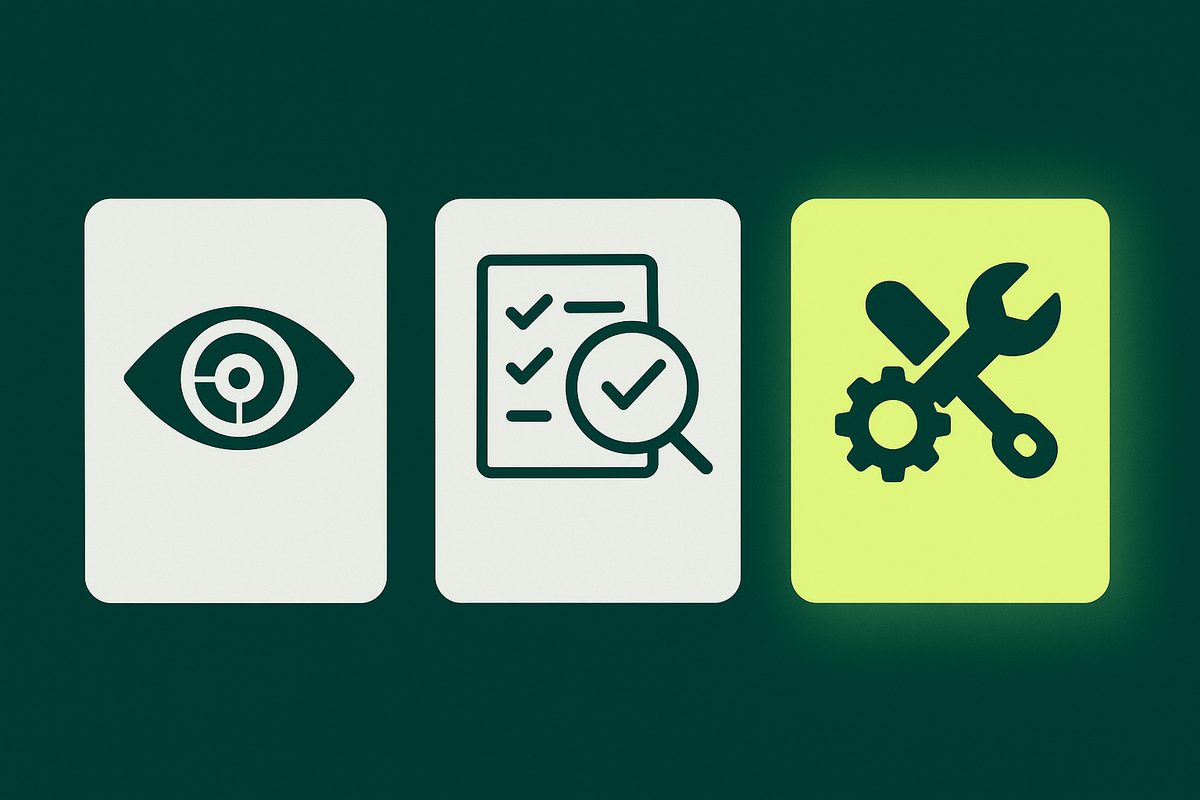
Before running through the list, it helps to pin down what these tools are supposed to solve. The best platforms cover three distinct layers:
Very few tools in 2026 handle all three layers well. Most are strong on monitoring, significantly weaker on optimization. Keep that in mind as you evaluate.
Best for: Existing Semrush subscribers who want one dashboard for traditional SEO and AI search.
Semrush launched its AI search product in September 2025 as an add-on to its core suite. Pricing starts at $99/month per domain. It tracks brand mentions across ChatGPT, Google AI Overviews, Gemini, and Perplexity, and adds a unique “Prompt Volume” estimate that gives strategic context beyond raw citation counts. The AI site audit flags pages that aren't structured for AI readability and gives concrete fix recommendations.
Best for: Ahrefs subscribers who want GEO monitoring at zero additional cost.
Ahrefs added Brand Radar to its existing paid plans — no extra charge for subscribers on the $99–$449/month tier. It's built on a 243M+ prompt database and tracks mentions across ChatGPT, Google AI Overviews and AI Mode, Perplexity, Gemini, Copilot, Reddit, TikTok, and YouTube descriptions. That platform breadth is distinctive — most competitors don't reach social and video channels yet.
Best for: Growth-stage brands and marketing teams that need a full-stack GEO platform with attribution.
Goodie AI is the most comprehensively featured GEO platform on the market as of 2026, starting at $495/month. It combines monitoring, auditing, optimization, and attribution reporting in a single purpose-built product — not an SEO tool that bolted on AI search features. No free trial is offered.
Best for: Agencies and brand teams that need best-in-class multi-LLM monitoring plus prompt taxonomy intelligence.
Scrunch is an AI-native monitoring and analytics platform that pairs citation tracking across multiple LLMs with prompt taxonomy analysis — it maps how users phrase questions to AI engines, identifies which of those questions you're not being cited for, and surfaces the content gaps. Pricing starts at approximately $250/month for brands and $500/month for agencies.
Best for: Early-stage companies beginning their GEO journey without enterprise budget.
Otterly.AI provides lightweight GEO monitoring starting at $25/month. It tracks brand citations across the major AI engines, surfaces citation frequency and trend lines, and shows where competitors are being cited in your place. Setup is fast and the interface is simple.
Best for: The most budget-constrained teams that need a starting point before investing further.
At $20/month, Rankscale is the lowest-priced dedicated GEO tracking option available. It monitors AI citations and tracks brand mentions across major platforms. It's not a strategic GEO tool — it's a temperature check that confirms whether you're showing up at all.
Best for: A free, no-commitment baseline before choosing any paid platform.
HubSpot's AI Search Grader is completely free. It scans ChatGPT, Perplexity, and Gemini and gives you a read on how your brand currently appears in AI-generated answers. It's a snapshot grader, not a monitoring platform — but it's a legitimate first step and a useful tool for building internal buy-in.
The right call depends less on feature matrices and more on where your team actually is:
Every platform on this list is a measurement layer. None of them write content, restructure your schema, build entity authority, or ship AI-optimized pages for you. They show you the score — improving it requires real execution: structured data, authoritative content, digital PR, and site architecture that AI crawlers can actually parse and cite.
For a deeper look at how to execute on each layer, see: What is Generative Engine Optimization (GEO)?, What is Answer Engine Optimization (AEO)?, GEO vs AEO vs SEO — what's the difference?, and how to get cited by ChatGPT and Perplexity.
At Developios, GEO and AEO are engineered into every site we ship — not added as a reporting afterthought. Across 150+ projects delivered with a 98% client satisfaction rate, the pattern that consistently moves citation metrics is the same: production-grade technical structure first (schema, entity clarity, crawlability), then content engineered to answer real questions at the right depth, then monitoring to confirm compound improvement over time.
We work with clients on Webflow, Shopify, and custom SaaS stacks. Depending on the client's existing toolset, we plug in Ahrefs Brand Radar or Semrush AI Toolkit for monitoring, use audit data to drive structured content sprints, and track citation rate changes as a core deliverable — not a vanity metric. When citation rates stall, the fix is almost always in the content or schema layer, not the monitoring configuration.
If you want a clear-eyed view of where your site stands in AI search right now, request a free Website Audit from Developios. We'll surface the gaps and map the path to closing them.
HubSpot AI Search Grader is currently the strongest free option. It scans ChatGPT, Perplexity, and Gemini to show how your brand appears in AI-generated answers. It's a one-time snapshot rather than continuous monitoring — use it to establish your baseline, then upgrade to a paid platform once you've confirmed GEO is a priority channel.
Ahrefs Brand Radar has the edge on prompt database size (243M+ prompts) and platform breadth — it covers Reddit, TikTok, and YouTube in addition to the major AI engines. Semrush AI Toolkit integrates better with its own audit and keyword research workflow. If you're starting fresh, Ahrefs' broader data set is the slight advantage. If you live in Semrush already, stay there.
For most teams in 2026, the GEO features built into Semrush or Ahrefs are a sufficient starting point. A dedicated platform like Goodie AI or Scrunch makes sense when you're managing GEO across multiple brands, need client-level reporting, or require the full audit-to-optimization loop in one product without stitching tools together.
The range is wide: free (HubSpot AI Search Grader) to $20/month (Rankscale) to $25/month (Otterly.AI) to $99/month/domain add-on (Semrush AI Toolkit, on top of your base Semrush plan) to $250–500/month (Scrunch) to $495+/month (Goodie AI). Most serious teams land in the $99–250/month range using their existing SEO platform's GEO layer plus targeted additional tooling.
At minimum: ChatGPT (OpenAI), Google AI Overviews and AI Mode, Perplexity, Gemini, and Microsoft Copilot. Ahrefs Brand Radar additionally covers Reddit, TikTok, and YouTube — relevant if your audience discovers content through social channels. Before buying, confirm the platforms driving your industry's AI search behavior are in scope for the tool you're evaluating.
No — and treat any vendor that claims otherwise with healthy skepticism. GEO tools measure your current visibility and surface where the gaps are. What actually drives citation rates is structural: authoritative content, entity clarity, schema implementation, digital PR, and site architecture AI crawlers can parse cleanly. The tool shows you the score. Closing the gap requires execution.
18 Meriden grove Bolton BL6 4RQ
.svg)
.svg)
C-Block, Citi Housing Jhelum, 49600
.svg)
.svg)
.svg)
.webp)
