
.svg)
Is Headless Shopify Worth It? Costs, Speed and the Real Answer (2026)

Published
June 27, 2026
.svg)
TL;DR: Headless Shopify means running a custom frontend (often Next.js) on top of Shopify's backend via the Storefront API, instead of a Liquid theme. It buys you speed and design freedom, but it costs $80k to $150k+ to build and adds $500 to $2,000/month in tooling. It is worth it mainly above roughly $10M in revenue. For most stores under that, a well-tuned Liquid theme captures most of the gain at a fraction of the cost.
Headless is the most over-recommended architecture in eCommerce. It is genuinely powerful, and for the wrong store it is an expensive way to make life harder. The honest answer to "should we go headless?" is almost always "it depends on your revenue and your goals," so let us make that concrete.
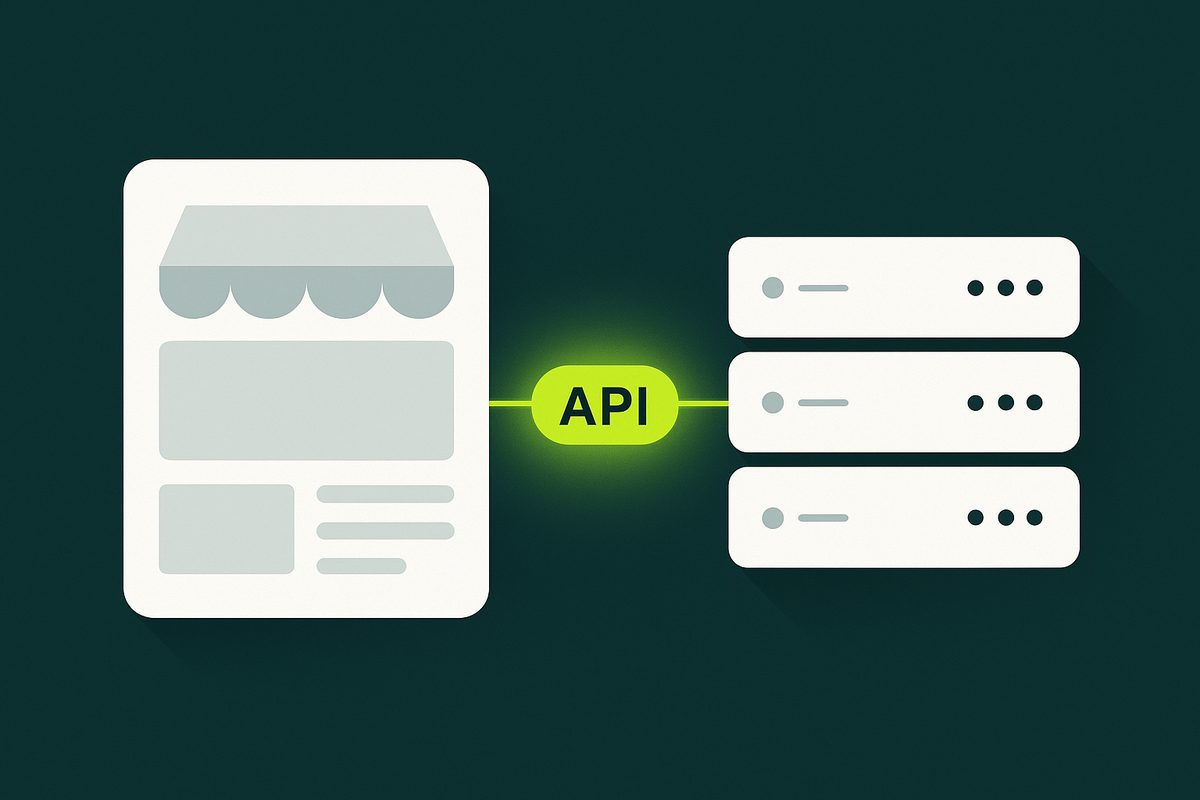
Headless Shopify decouples the storefront (what shoppers see) from Shopify's commerce backend (catalog, cart, checkout, orders). Instead of a Liquid theme rendering pages, you build a custom frontend, usually in a framework like Next.js, that pulls data through Shopify's Storefront API. Checkout still runs on Shopify.
The appeal is control. You get a fast, app-like frontend, total design freedom, and the ability to pull content from any source. The cost is complexity: you are now maintaining a custom application, not configuring a theme.
This is where the decision usually gets made. The numbers are not small.
So the question is not just "is headless faster?" It is "will the extra speed and flexibility earn back six figures plus monthly tooling?"

Performance is the main argument for headless, and the gains are real but more modest than the marketing suggests. A well-built headless frontend routinely hits a Largest Contentful Paint under 1.2 seconds, against a median of around 3.1 seconds for standard themes. In practice that is a 0.4 to 1.2 second improvement and a 3 to 8% conversion lift over a tuned Liquid theme. Google and Deloitte found a 0.1-second load improvement alone lifted conversions by 8.4%, so speed clearly pays.
The ceiling can be much higher with the right brand. Sennheiser reported a 136.7% increase in conversion rate and 74.8% more add-to-carts after going headless. Not every brand sees a 2x lift, but the pattern of better speed and UX repeats across well-executed enterprise migrations.
The threshold that matters: headless usually makes financial sense above roughly $10M in annual revenue. For mid-market brands in the $5M to $20M range with a well-executed build, payback typically lands in 12 to 18 months. Below $5M, the same budget spent on CRO and acquisition usually returns 3 to 5x more.
For roughly 80% of brands under $10M a year, the answer is: not yet. Optimize the Liquid theme first. Well-tuned Liquid themes have gone from 3.4-second LCP down to 1.7 seconds, which captures most of the speed gain headless promises at around 5% of the cost.
Skip headless for now if any of these are true:
Headless earns its cost when you have the revenue to absorb it and a specific reason to need it:
We build both, so we have no incentive to push you toward the expensive option. Across 150+ projects delivered at 98% client satisfaction, our default advice for stores under $10M is to tune the Liquid theme and fix the funnel first, because that is where the return is. We recommend headless when the revenue, the roadmap, and the performance ceiling actually justify it.
When headless is the right call, we build it properly: a fast Next.js frontend, clean Storefront API integration, a headless CMS your team can actually use, and structured data so the store performs in both conversion and AI search. When it is not the right call, we will tell you, and point the budget where it returns more.
Not sure which side of the line your store is on? A free Website Audit will tell you whether headless would pay off or whether a tuned theme gets you most of the way for far less.
For most brands under $10M in revenue, no, not yet. The build costs $80k to $150k+ plus $500 to $2,000/month in tooling, and a well-tuned Liquid theme captures most of the speed gain for a fraction of that. Above $10M, where a 3 to 8% conversion lift is worth six figures, headless often pays back in 12 to 18 months.
A headless Shopify Plus build typically runs $80,000 to $150,000+, versus $30,000 to $60,000 for a strong Liquid theme. On top of that, expect $500 to $2,000/month for a headless CMS, hosting, and search, plus ongoing developer maintenance.
Yes, but the gap is smaller than often claimed. Headless frontends commonly hit sub-1.2-second LCP versus a ~3.1-second median for standard themes, a 0.4 to 1.2 second gain and a 3 to 8% conversion lift. A properly tuned Liquid theme can reach 1.7 seconds, capturing most of that improvement at far lower cost.
Liquid is Shopify's built-in templating language; the theme renders pages directly from the platform. Headless replaces that frontend with a custom application (often Next.js) that pulls data via the Storefront API, while checkout stays on Shopify. Headless gives more control and speed but adds significant cost and maintenance.
Roughly $10M in annual revenue is the common threshold. Mid-market brands ($5M to $20M) with a well-executed build typically see payback in 12 to 18 months. Below $5M, the same money spent on CRO and acquisition usually returns 3 to 5x more.
It can, because speed and clean, structured markup help both Google and AI engines. But a well-built Liquid theme can achieve the same SEO and AI-search fundamentals. Headless is not required for strong AI-search visibility; structure and speed are, and you can get those either way.
Thinking about going headless? Get a free Website Audit from Developios and we will give you a straight answer on whether it would pay off for your store, or whether a tuned theme gets you there for less.
18 Meriden grove Bolton BL6 4RQ
.svg)
.svg)
C-Block, Citi Housing Jhelum, 49600
.svg)
.svg)
.svg)
.webp)
